Monday, 22 November 2010

Memories of First Ballymacarrett

First Ballymacarrett Presbyterian Church by David Long
When First Ballymacarrett Presbyterian Church held its final service recently it brought to an end 173 years of work and witness in East Belfast.

Those who have memories of the Church or a family connection may be interested to learn that David Long, President of the Ulster Watercolour Society, completed a beautiful watercolour painting depicting a time when the church was full to capacity in the 1940s.

Mounted prints of the painting (Image size 26x22cm - 40x36cm overall) are now available priced at £20 (plus £4 p&p UK and £6 Eire) and can be purchased through David  Tel: (028) 9127 0101 Email: davidlongni@talktalk.net. 


Saturday, 20 November 2010

A Little Bit of History - The First Umbrella in Driffield

1843

THE FIRST UMBRELLA SEEN IN DRIFFIELD.

The first umbrella seen in Driffield was introduced about fifty years ago, by the late Mr. John Horsley, who, being at Hull, and seeing some of these new-fangled and then much-ridiculed articles, purchased one for his daughters. As may be expected, the curious machine was quite a nine days' wonder in Driffield, and numbers of people went to view the contrivance with as much astonishment as, in these go a-head days of improvement and invention, we look upon the flying machine. -- Hull Advertiser.

(This article was originally published in the Banner of Ulster on 27 June 1843. The text along with other with many other extracts can be found on my website Eddies Extracts.)

Some Links: A History of the Umbrella, Who Invented the Umbrella, The History of the Umbrella


Tuesday, 16 November 2010

The Battle of Lisburn, 1641.

SOME EXTRACTS
FROM THE
RECORDS OF 
OLD LISBURN
AND THE
MANOR OF KILLULTAGH.

-- -- -- --
Edited by JAMES CARSON.
-- -- -- --

V.

-- -- -- --

THE BATTLE OF LISBURN, 1641.

-- -- -- --

"LISNEGARVEY,"
the 28th day of Nov., 1641.

"A brief relation of the miraculous victory gained there that day over the first formed army of the Irish, soon after their rebellion, which broke out the 23d of October, 1641.

(From the Cathedral Records.)

"Sir Phelemy O'Neil, Sir Connor Maginnis, their general then in Ulster Major-General Plunkett, (who had been a soldier in foreign kingdoms) having enlisted and drawn together out of the counties of Armagh, Tyrone, Antrim, and Down, and other counties in Ulster, eight or nine thousand men, which were formed into eight regiments, and a troop of horse, with two field-pieces; they did rendezvous on the 27th of November, at and about a house belonging to Sir John Rawdon, at Brookhill, three miles distant from Lisnegarvy, in which they knew there was garrison of five companies, newly raised, and the Lord Conway's troop of horse. And their principal design being to march into and besiege Carrickfergus, they judged it unsafe to pass by Lisnegarvy, and therefore resolved to attack it next morning, making little account of the opposition that could be given them by so small a number, not half armed, and so slenderly provided of ammunition, (which they had perfect intelligence of by several Irish that left our party and stole away to them) for that they were so numerous and well provided of ammunition by the fifty barrels of powder they found in his Majesty's store, in the castle of Newry, which they surprised the very first night of the Rebellion; also they had got into their hands the arms of all the soldiers they had murdered in Ulster, and such other arms as they found in the castles and houses which they had plundered and burnt in the whole province. Yet it so pleased God to disappoint their confidence, and the small garrison they so much slighted, was much encouraged by the seasonable arrival of Sir George Rawdon, who being in London on the 23d of October, hastened over by the way of Scotland; and being landed at Bangor, got to Lisnegarvy, tho' late, on the 27th Nov. where those new-raised men, and the Lord Conway's troop, were drawn up in the market-place, expecting hourly to be assaulted by the rebels; and they stood in that posture all the night, and before sunrise, sent out some horse to discover their numerous enemy, who were at mass; )it being Sunday) but immediately upon sight of our scouts, they quitted their devotion, and beat drums, and marched directly to Lisnegarvy; and drawn up in battalia, in the warren, not above a musket-shot from the town, and sent out two divisions, of about six or seven hundred apiece, to compass the town and plant their field-pieces on the highway to it, before their body, and with them and their long fowling-pieces killed and wounded some of our men, as they stood in their ranks in the market-place; and some of our musketeers were placed in endeavouring to make the like returns of shot to he enemy. -- And Sir Arthur Yerringham (governor of Newry) who commanded the garrison, and Sir George Rawdon, and the officers foreseeing if their two divisions on both sides of the town should fall in together, that they would overpower our small number. For prevention thereof, a squadron of horse, with some musketeers, was commanded to face one of them that was marching on the north side, and to keep them at a distance as long as they could; which was so well performed, that the other division which marched by the river on the south side, came in before the other, time enough to be well beaten back by the horse, and more than two hundred slain of them in Bridge street, and in their retreat as they fled back to the main body.

"After which expedition, the horse returning to the market-place, found the enemy had forced in our small party on. the north side, and had entered the town, and was marching down Castle-street, which our horse so charged there, that at least 300 were slain of the rebels in the street, and in the meadows behind the houses, through which they did run away to their main body; whereby they were so much discouraged, that almost in two hours after, their officers could not got any more parties to adventure upon us; but in the main space, they entertained us with continued shot from their main body, and their field pieces, till about one of the clock, that fresh parties were issued out and beaten back as before, with the loss of many of their men, which, they supplied with others till night; and in the dark they fired all the town, which was in a few hours turned into ashes; and in that confusion and heat of the fire, the enemy made a fierce assault. But it so pleased God, that we were better provided for them than they expected, by a relief that came to us at night-fall from Belfast, of the Earl of Donegall's troop, and a company of foot, commanded by Captain Boyd, who was unhappily slain presently after his first entrance into the town. And after the houses were on fire, about six of the clock, till about ten or eleven, it is not easy to give any certain account or relation of the several encounters in divers places in the town, between small parties of our horse, and those of the enemy, whom they charged as they advanced, and hewed them down, so that every corner was filled with carcases, and the slain were found to be more than thrice the number of those that fought against them, as appeared next day, when the constables and inhabitants, employed to bury them, gave up their accounts. About ten or eleven o'clock, their two generals quitted their stations, and marched away in the dark, and had not above 200 of their men with them, as we were informed next morning, by several English prisoners that escaped from them, who told us that the rest of their men had either run away before them, or were slain; and that their field-pieces were thrown into the river, or into some moss-pit, which we never could find after; and in this their retreat, they fired Brookhill house, and the Lord Conway's library in it, and other goods, to the value of five or six thousand pounds, their fear and haste not at all allowing them to carry any thing away, except some plate and some linen; and this they did in revenge to the owner, whom they heard was landed the day before, and had been active in the service against them, and was shot that day, and also had his horse shot under him, but mounted presently upon another: and Captain St. John and Captain Furley were also wounded, and about thirty men more of our party, most of whom recovered, and not above twenty-five or twenty-six were slain. And if it be well considered, how meanly our men were armed, and all our ammunition spent be fore night, and that if we had not been supplied with men, by the timely care and providence of the Earl of Donegall, and other commanders from his Majesty's store at Carrickfergus, (who sent us powder, post, in mails, on horseback, one after another) and that most of our new-raised companies, were of poor stript men that had made their escape from the rebels, of whom they had such a dread, that they thought them not easily to be beaten, and that all our horse (that did the most execution) were not above 120. vis., the Lord Conway's troop, and a squadron of the Lord Grandison's troop, (the rest of them having been murdered in their quarters in Tanragee) and about 40 of a country troop, and a company from Belfast that came to us at night. It must be confessed that the Lord of Hosts did signally appear for us, who can save with or without any means, and did by very small means give us the victory over his and our enemies, and enough of their arms to supply the defects of our new companies, and about 50 of their colours and drums. But it is to be remembered with regret, that this loss and overthrow did so enrage the rebels, that for several days and weeks after, they murdered many hundreds of the Protestants, whom they had kept prisoners in the counties of Armagh and Tyrone, and other parts of Ulster, and tormented them by several manners of death. And it is a circumstance very observable, that much snow had fallen in the week before this action, and on the day before it was a little thaw, and a frost thereupon it in the night, so that the streets were covered with ice, which proved greatly to our advantage; for that all the smiths had been employed that whole night to frost our horses, so that they stood firm, while the brogues slipt and fell down to our feet. For which, and our miraculous deliverance from a cruel and bloody army, how great cause have we to rejoice, and praise the name of our God, and say with that kingly prophet -- 'If it had not been the Lord himself who was on our side, when men rose up against us, they had swallowed us up quick, when they were so wrathfully displeased at us. Yea the waters of the deep had drowned us, and the stream had gone over our soul; but praised be the Lord who has not given us over a prey unto their teeth: our soul is escaped even as a bird out of the snare of fowler: the snare is broken and we are safe. Our hope standeth in the name of the Lord, who made Heaven and Earth." -- Amen.

-- -- -- -- -- --

LISBURN CATHEDRAL CHARTER, 1662.


Copy of patent which erected the Church of Lisburn into a Cathedral for the United Diocese of Down and Connor, and empowered the Town of Lisburn to return two Burgesses to the Irish Parliament. The original of this document, in Latin, was in 1834 in the Hertford Estate Office.

"Charles II. by the grace of God, of England, Scotland, France, and Ireland, King, Defender of the Faith, &c. To all to whom these our present Letters shall come Greeting. WHEREAS we understand that the cathedral church of Down and Connor, in our province of Ulster, within our kingdom of Ireland, being at present not only ruinous and laid waste, but also were founded in inconvenient places and extreme parts of the several dioceses of Down and Connor, by means whereof, not only the service of God was much neglected, but the necessary meetings and assembly of the bishops and clergy in those places obstructed and impeded. AND WHEREAS the Church of Lisburne, alias Lisnagarvie, in our county of Antrim, and diocese of Down, being situate near, the middle of the dioceses aforesaid, and now united, can more conveniently serve for a Cathedral church for the bishopricks aforesaid. KNOW YE, therefore, that WE being mindful of nothing more than that true religion and the true worship of God should flourish of our royal authority and by our authority, of Supreme Head of the Church of England and Ireland, which we enjoy of our special grace likewise with the assent and consent of our Right Trustie and Right Well-beloved Cousin and Counsellor, James, Duke of Ormond, our Lieutenant-General of our said kingdom of Ireland, and also according to the tenor and effect of our certain letters under our privy signet and sign, Manl. dated at our court at Whitehall, the 10th day of Sep. in the 14th year of our reign, and now inrolled in the rolls of our chancery of our said kingdom, have erected, created, founded, ordained, made, constituted, and established the said Church of Lisburne, alias Lisnagarvie, and the place of the same church to be for over hereafter the Cathedral church and episcopal seat of the aforesaid several bishopricks of Down and Connor, and to continue for ever in all future times. And so to bo established, and for ever to be inviolably observed, WE will and command by those Presents. And that the said church of Lisburne, alias Lisnagarvie, shall for ever hereafter be named and called by the name of the Cathedral Church of Christ Church of Lisburne, alias Lisnagarvie, all shall use and enjoy  all jurisdictions, rights, privileges, advantages, and immunities to a cathedral church belonging, or in any manner appertaining; and that the same church, with all and singular its rights and members, shall be the episcopal seat of the Bishop of Down and Connor, and his successors for ever. AND FURTHER, of our more ample special grace, and also with the advice and consent aforesaid, HAVE given and granted, and by these presents, for us, our heirs and successors WE do give and grant that the Dean and Chapter of Down, and their successors, and also the Dean and Chapter of Connor and their successors, from time to time, and as often as occasion shall require, can and may assemble and congregate themselves at the Cathedral Church of Christ Church aforesaid of Lisburne, alias Lisnegarvie, and there to make and constitute from time to time, such and the like ordinances, confirmations, acts, and statutes, as in the several ancient churches of assemblies of the said Bishopricks might and ought to appertain. And that all and singular confirmations, ordinances, statutes, and other acts, to be made by the several and respective Deans and Chapters aforesaid, and their successors in the said Cathedral Church of Christ Church of Lisburne, alias Lisnagarvie, shall be as good and valid in Law to all intents and purposes, as if the same was made in the several assemblies or churches of Down and Connor. And further of our more ample, special grace, and also with the advice and consent aforesaid for us, our heirs and successors, WE do will and grant, that the choyr and other officers and ministers serving in the cathedral church aforesaid, may have and receive out of the several impropriations appointed and granted by us for the augmentation of the revenues of the church, such allowances, pensions, stipends, and salaries for divine service to be performed in the cathedral church aforesaid, as the Lord Primate of all Ireland for the time being, and the Bishop of the Diocese for the time being, with the consent and approbation of the Lieutenant-General, or General Governor of our said kingdom of Ireland for the time being, shall see competent and convenient for celebrating devine service there, and their proper maintenance.

"AND WHEREAS we retain a sense of the many Losses which the Inhabitants of the said Town of Lisburne. alias Lisnegarvie, have sustained for their allegiance towards us and our Royal Father of Glorious Memory. KNOW YE THEREFORE that WE of our special grace, certain knowledge, and mere motion, for us our heirs and successors, Do Give and Grant to the dwellers and inhabitants of the said Town of Lisburne, alias Lisnegarvie, That they and their successors for ever hereafter, can, and may, from time to time, elect and choose two fit and proper persons to be Burgesses to attend, and sit in every parliament hereafter to be summoned, appointed, and held within our said kingdom of Ireland, And that, such persons so hereafter to be appointed to sit and attend in Parliament, as Burgesses for the said Town, can, and may freely, lawfully, and without fear, treat and consult of such maytters and things which to them there shall be set forth and declared, and thereupon to render their votes and suffrages as any other burgesses, of any other ancient Borough within our said kingdom of Ireland, might, or could do, or heretofore was accustomed to do. AND FURTHER WE will, and by these Presents for us, our heirs and successors, with the advice end consent aforesaid, and according to the tenor of our aforesaid Letters, Do strictly enjoin and command, that whenever a Parliament hereafter to be summoned in our said kingdom of Ireland, the Sheriff of us, our heirs and successors of our county of Antrim aforesaid for the time being, by virtue of a writ directed to him for the electing of knights, citizens, and burgesses for such Parliament, shall make and send his precept to the Seneschal of the Manor of Killultagh for the time being, (within which Manor the said Town is situate) for the making such election in and for the aforesaid town of Lisburne, alias Lisnegarvie, in the same form as such precept to any ancient Borough, in such case, was accustomed to be sent; which Seneschal, also, we strictly enjoin and command that such precept to him to be directed, in all things to execute, and to cause such election to be made, and to return in such manner and form as in any other Borough of our said kingdom of Ireland, usually, or anciently was made, or now ought to be done, notwithstanding that the Inhabitants of the said Town are not Incorporated, and any law, statute act, ordinance, or any thing whatsoever made to the contrary thereof, in any wise notwithstanding. Willing, moreover, and granting that these our letters Patent, or the Involvement thereof, shall be in and by all things firm, good, valid, sufficient, and effectual in the law against us, our heirs and successors, as well in all the courts of us as elsewhere, -- wheresoever within our said kingdom of Ireland, without any other confirmation, license, or tolleration from us, our heirs or successors, hereafter to be procured or obtained. Notwithstanding the ill naming, or ill reciting, or not reciting the said cathedral church, and notwithstanding any defect in the certainty of the premises, and any other thing, cause, custom, or statute, in any manner to the contrary notwithstanding. Altho' express mention of the true yearly value or certainty of the premises, or either of them, or of any other gifts or grants, by us or by any our progenitors, heretofore being made in these presents, any statute, act, ordinance, or provision; or any other thing, cause, or matter whatsoever, to the contrary of the promises in any wise notwithstanding. In witness whereof, we have caused these our letters to be made patent, witness our aforesaid Lieutenant-General of our said kingdom of Ireland, at Dublin, the 27th day of October, in the 14th year of our reign."


(This article was originally published in the Lisburn Standard on 17 November 1916 as part of a series which ran in that paper each week through 1917. The text along with other extracts can be found on my website Eddies Extracts.)


Saturday, 13 November 2010

In Remembrance - The Rhetoric of Duty and Honour


In Flanders Fields the poppies blow
Between the crosses row on row...


XMAS MESSAGE FROM ULSTER DIVISION

Wishes and Some Hard Truths.

Major-General O. S. W. Nugent, D.S.O. (A.D.C. to his Majesty the King), the General Officer Commanding the Ulster Division, sent the following Xmas message to the people of Ulster through the medium of the "Belfast News-Letter":--

You have done me the honour of asking me to contribute a message as representing the Ulster Division.

A message to the people of Ulster from Ulster's Division must contain, besides greetings and good wishes, some hard truths.

For this is the position as it stands to-day between the Ulster Division and those of its own kin at home.

When the people of Ulster in 1914 promised a Division to the service of King and country, no finer body of men than those who redeemed the promise were raised in any portion of the King's dominions.

Cheerful under all circumstances, self-respecting, steadfast in their bearing, most gallant in attack, Ulstermen in France and Belgium have earned a high reputation, even amongst the magnificent soldiers of the Empire, of which Ulster may legitimately be proud.

The morning of the 1st July will be one of the glories of the Province as long as men love to think of gallant deeds.

Will there be an element of shame in the memory amongst the thousands of lusty young Ulstermen at home?

They have no part as yet in the honour of the real manhood of Ulster. They will have no part in the future when the Ulster Division comes home to enjoy the respect and esteem earned by those who have seen the path of duty and have followed it even to the end.

But if they have no part now, they need not be without it. Every man can still redeem his birthright and take a man's share in the work of the deliverance of mankind from Prussian barbarism.

He need not fear being asked why he had tarried so long upon the road. He will be welcomed as an Ulsterman, and he will find himself a better and a happier man from the knowledge that he has done his duty.

Christmas is a time of memories, when families are reunited and friends meet again. Years hence Ulster will still be keeping green the memory of those whose work out here is not nearly finished yet.

Young men at home still have their chance. Do they not want to be able to look their countrymen in the face, here and at home?

Do they not realise that there will be tens of thousands of men throughout the Empire who have answered the call of duty, and that the terms on which all able-bodied young men will associate together after the war will largely turn on the answer which can be given to the question: "What did you do in the war?"

For Ireland's sake, all who love her must hope that the community at large will insist that the stain upon her national pride and self-respect shall he removed, and that the contempt which Ireland is heaping up for herself shall give place to the mutual esteem which is creating a daily stronger bond of fellowship between the soldiers of the Empire in France and Belgium. There is only one way to gain membership, and that is not by the road upon which Ireland is drifting leaderless to-day.

The Ulster Division is growing stronger day by day, but its ranks are being filled by Englishmen and Scotchmen -- men who have not shirked duty, and who have done for Ulster what she has, as yet, failed to do for herself.

The young men of Ulster are capable of great achievements. The whole of the history of the province is one of achievements. It is in the earnest hope that its young men will make yet another advance on the road of honour and duty that this message is written.

(Lisburn Standard, 29 December 1916)


THE STAY AT HOME.

     "Your King and country need you" to aid the cause of Right;
     does loyal impulse lead you to arm yourself and fight?
     Are you ignobly skulking, your motto, "Safety First,"
     when woe is largely hulking, and foemen's bombshells burst?
     The country's stress produces men great of soul, I wist,
     while you invent excuses for failing to enlist.
     You have an aching finger, you have a spavined toe,
     and that is why you linger and see your neighbours go.
     When weapons cease to rattle, aud peace has come to men;
     when from the fields of battle the boys come home again;
     when heroes tell their stories of struggles past and done,
     of sufferings and glories, and triumphs hardly won,
     how shall the shirker harken to that, and save his face?
     He'll feel the shadows darken, the shadows of disgrace.
     Who'll heed his explanation, when, sore, he reels it off:
     "I wished to help the nation, but had the whooping cough!
     My martial spirit tingles, and I to war would jump,
     but I was down with shingles, a measle and a mump!"
     Your King and country need, you, their banner to protect;
     go, let a German bleed you, and gain some self-respect.

(Lisburn Standard, 3 November 1916)


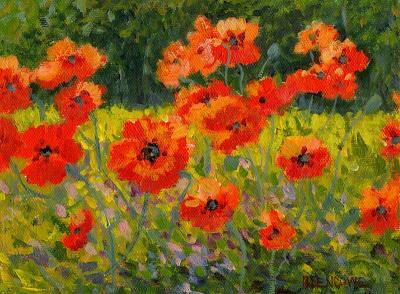
Images: Poppy Garden by Jan Blencowe; The Attack of the Ulster Division by J.P. Beadle in Belfast City Hall.


Tuesday, 9 November 2010

Extracts from the Records of Old Lisburn - Heterogenea, 1803 (part 4)

SOME EXTRACTS
FROM THE
RECORDS OF 
OLD LISBURN
AND THE
MANOR OF KILLULTAGH.

-- -- -- --
Edited by JAMES CARSON.
-- -- -- --

IV.

-- -- -- --
HETEROGENEA, OR MEDLEY.
(For the benefit of the Poor.)
By JOHN MOORE JOHNSTON.
-- -- -- --
Printed at Downpatrick in 1803 by James Parks.
-- -- -- --

Editorial Notes on the Heterogenea.

The name Killultagh is used in several senses. As Killultagh and Derrykillultagh it is the name of a townland in Ballinderry containing some 700 acres. The territory of Killultagh was an old term in use long before the division of the country into Baronies and Counties, and roughly comprised the district lying between the River Lagan and Lough Neagh. The Manor of Killultagh, known as the Hertford Estate, embraced the old territory, and in addition the lands Of Derrievolgie and numerous adjoining townlands. Sir Foulke Conway received a grant of the territory about 1608, the other lands were afterwards added to the Conway property. Killultagh in Irish is Coill Ultagh, the forest or wood of Ulster. Lis-na-garvach, the fort of the gamester. Killultagh belonged to the O'Neills, the descendants of Hugh Boye O'Neill. There were three forts in the territory -- Inisloughlin, near Trummery House, Moira; Portmore, beside Lough Neagh; and one on a mound above the Lagan, close to Lisnagarvey.

SIR FOULKE CONWAY

died in 1624. The Church of St. Thomas, now the Cathedral, was opened for divine service in 1623. Sir Foulke was succeeded by his brother, Sir Edward, Baron Conway, who got the title of Viscount of Killultagh in 1627, and built the Castle of which the remains still exist in the Castle Gardens. His son, also named Edward, the second Viscount, succeeded in 1630, and died in 1655; and his son, also named Edward, who built the Castle at Portmore, died in 1683. The property then passed by will to his cousin, Popham Seymour, who took the name of Conway. Popham fell in a duel with Colonel Kirk in 1699, and died unmarried. The estate then passed to his brother, Francis Seymour, first Lord Conway, created Baron Conway of Killultagh in 1712. He died at Lisburn 1731, and was succeeded by his son Francis, first Marquess, created Viscount Beauchamp and Earl of Hertford 1750, and Earl of Yarmouth and

MARQUESS OF HERTFORD 1793.

He died 1794, his honours and estate going to his son Francis, second Marquess, K.G., who assumed the additional surname and arms of Ingram; and died in 1822. To him succeeded his son, Francis Charles, third Marquess, K.G., who died in 1842. He is best remembered as the original of the Marquis of Steyne in Thackeray's "Vanity Fair" and Lord Monmouth in Disraeli's "Coningsby." Richard, the forth Marquess, K.G., son of Francis Charles, died, unmarried, in 1870. He was known from 1822 till the death of his father as Earl of Yarmouth. The title then passed to Francis George Hugh, fifth Marquees, cousin of Richard, and the Irish Estate, after a lawsuit with Sir Hamilton Seymour, passed, in 1872, into the possession of

SIR RICHARD WALLACE, BART.

From the Dictionary of National Biography we gather that Sir Richard, connoisseur and collector of works of art, born 1818, died 1890, was at one time reputed to be the natural son of the fourth Marquis of Hertford, his senior by only 18 years. But the truth in all probability is that he was the fourth Marquis' half brother and the natural son of that nobleman's mother, the great heiress, Maria Fagniani, Marchioness of Hertford, who had married in 1798 Francis Charles, the third Marquis. Maria Fagniani was the daughter of the Marchesa Fagniani, and was adopted by George Augustus Selwyn, wit and politician, 1719-1791. A dispute between the Duke of Queensberry and Selwyn regarding her paternity was never settled. In early youth Sir Richard was known as Richard Jackson. On Lord Hertford's death in 1870, he found himself heir to such of his property as the deceased Marquis could devise by will, including a house in Paris, Hertford House in London, the Irish Estates about Lisburn, which then brought in some £50,000 a year, and the finest collection of pictures and objects of art in private hands in the world. He represented Lisburn in the Imperial Parliament from 1873 to 1885. A large portion of his life was spent in Paris, where he died 20th July 1890, leaving no surviving children. He married in 1871 the daughter of a French officer -- Bernard Castelnau -- who had already borne him a son. Lady Wallace died in 1897. She left by will to the English nation the Hertford-Wallace Collection. Hertford House, London, was acquired by the Government and adapted to the purposes of a public museum, and it is there that the collection is now domiciled. Sir Richard Wallace was a noble and philanthropic gentleman. He spent vast sums of money in assisting the suffering citizens of Paris in 1870. His generosity to Lisburn is well known. His liberal treatment of the tenantry on the Hertford Estate, after he came into possession, was worthy of all praise, reversing in a moment the harsh and oppressive methods of his predecessors.

SIR GEORGE RAWDON

was possibly the most influential man in Killultagh in the 17th century. He was born at Rawdon Hall, near Leeds. He appears to have been M.P. for Belfast in 1639, and later for Carrickfergus. In 1640 he got a lease from Viscount Conway of certain lands which included Brookhill, and the lease would appear to have been renewed in 16419. In 1654 he was building a house in Lisburn, having married in that year, as his second wife, Dorothy Conway, sister of the second Viscount Conway. Rawdon assisted in the defence of Lisburn against the Irish rebels, November 28th, 1641. For his various services to the State he secured a grant of several thousand acres of land in the territory of Moyra, which had belonged to the O'Laverys, and became Sir George Rawdon, Bart., of Moyra House. He died in 1684, and was buried in Lisburn. He was the ancestor of the Earls of Moira. The first Earl was created in 1761; the second Earl added to his honours the title of Marquess of Hastings in 1816; the third and fourth Earls followed; the fifth died in 1868, and the title became extinct.

A valuable article by the Rev. W. H. Dundas, B.D.. has been largely drawn upon in compiling the foregoing notes on Killultagh -- the Early History of the Conway Family and Sir George Rawdon.

The Dioceses of

DOWN AND CONNOR

were united in 1442. Dromore was united with Down and Connor in 1842. The Bishops of the United Diocese were -- Richard Mant, 1842; Robert Knox, 1849; William Reeves, 1886; Thomas J. Welland, 1892; John B. Crosier, 1907; Charles F. D'Arcy, 1911. In 1699 Bishop Smith, a native of Lisburn, was Bishop of Down and Connor. He was appointed at 34 years of age. The United Diocese includes the whole of the Counties of Antrim and Down and portions of Londonderry and Armagh.

LISBURN CATHEDRAL

was originally built in 1623, and known as the Church of St. Thomas. It was twice burnt -- by the Irish rebels in 1641 and accidentally in 1707. When rebuilt after 1707 it was minus the spire, and remained so for almost 100 years. The spire was added by the second Marquis of Hertford in 1807. Since then, from its lofty height, the Curfew Bell has sounded forth nightly at 9 o'clock 100 strokes of the bell, marking the ancient custom and the hour. The Church was constituted in 1662 the Cathedral of the Diocese of Down and Connor by charter of Charles II. It is remarkable as being the church of which Bishop Jeremy Taylor was lecturer, and in later times the chief church of the Huguenot settlement. Incumbents -- Rev. James Mace, 1661; Rev. Joseph Wilkins, 1672; Rev. George Wilkins, 1716: Rev. Anthony Rogers, 1727; Rev. Richard Dobbs, 1749; Rev. Thomas Higginson, 1777; Rev. Wm. Traill, Archdeacon, 1781; Rev. Snowden Cupples, D.D., 1796; Rev. James Stannus, Dean of Ross, 1835; Rev. Hartley Hodson, D.D., 1876; Rev. William D. Pounden, A.B., Canon, 1884.

The information regarding the United Diocese and incumbents of the Cathedral is taken from the Handbook of the United Diocese of Down and Connor and Dromore, compiled by L. M. Ewart in 1886.

On the Cathedral organ are two plates recording that it was

"Presented by the Marquis of Hertford through the very Rev. Dean Stannus."

     "Snowden Cupples, D.D., Rector.
      Thos. Thompson, Curate.
      Surgeon Thomas Wethered,
      George Emerson, C. Wardens.
                  1832."

There are twenty-eight tablets or monuments in the building; including those to Bishop Jeremy Taylor, who died in Lisburn 1667; buried at Dromore; the Rev. Saumerez Dubourdieu, 1812; Brigadier-General John Nicholson, 1857; his brother, Major Charles J. Nicholson, 1862; Lieutenant William Dobbs, R.N., 1778; Lieutenant Thomas Johnson-Smyth, R.N., 1846; Major T. R. Johnson-Smyth, 1900; Colonel James Graham, 1905; Major R. B. Fulton, 1836; and to Lakes, Mercers, Rogers, Hawkshaws, Grahams, Whitlas, Atkinsons, Higginsons, etc., etc. The following is a short extract from a very long inscription on a tablet on the wall in the hall approaching the gallery --

     "S.M. John Mercer, Esq., from Scotland, died about A.D. 1636.

     "Captain John, son of the above, died A.D. 1650.

     "John of Castle Robin, Derryaghey, son of the above, died A.D. 1726.

     "John Mercer, Esq., of Hill Hall Court, son of the above, died A.D. 1731."

There is also a memorial erected in 1915 to commemorate the 60 years' faithful ministry in the Diocese of the Rev. William Dawson Pounden, B.A., Canon.

JOHN GOUGH,

the first head-master of the Ulster Provincial School, Lisburn, was a man of ability and learning. He published a "History of the People called Quakers," in four volumes, in 1789, and was also author of a book on Arithmetic which for many years held the position of a Standard text-book in Irish schools. He died in 1791. In the Friends' Burying-ground, Railway Street, is a stone to his memory bearing the simple record--

      "John Gough.
         Born 1721.
             Died
    25th 10th Mo., 1791."

-- -- -- --

The Vitriol Works referred to as carried on by Dr. Crawford were on the Island formed by the Canal and River Lagan, now occupied by the Island Spinning Co., Ltd.

-- -- -- --

The old Market-house was situated in Market Square, and occupied the lower portion of what is now known in 1916 as the Assembly Rooms.

-- -- -- --

The Linen Hall was located at the junction of Linenhall Street and Smithfield, opposite the lower end of Market Street, and now converted into a Butter and Egg Market.

-- -- -- --

The old Castle was built between 1624 and 1630 in what is known as the Castle Gardens, and of which some of the walls and foundations still exist; it was destroyed by fire in 1707.

-- -- -- --

Prior to the Union Lisburn returned two burgesses to the Irish Parliament.

-- -- -- --

Mr. George Sands, C.E., has in his possession two large maps engrossed on sheep skin, bearing dates 1726 and 1729. The town lands and names of then occupying tenants on the Hertford Estate are shown thereon. He has also a book, 1705-1709, containing a large number of short agreements in relation to the taking of land signed by the tenants. It is believed there are several more of these books in existence.

Mr. Joseph Allen, who has accumulated a valuable collection of books, pamphlets, and relics of old Lisburn, has in his possession a copy of an

ANCIENT MAP OF THE TOWN,

which shows that the general configuration remains practically unchanged for almost three hundred years. Castle Street (described in the map as the High Street), Bridge Street, Market Square, and the Cathedral occupy the same ground and positions to-day as they did when James the First was King. Only the people and buildings have changed. On the margin of the map are the names of 52 residents. They agree fairly closely with those given in Heterogenea, save that in several instances the spelling of the names differ. In the Market Square was a School-house, to be succeeded by a Market-house, and later by the Assembly Rooms. The 52 houses are numbered, and the name of The occupier of each house is given. The High Street or Castle Street would appear to extend not quite to the Infirmary, Bridge Street ran down to the Lagan, and Market Square ended about Tanyard Lane. The whole town was comprised within these limits. With the copy of the Map is an undated note by Edward Cupples, possibly a relative of Dr. Cupples, incumbent of Lisburn Parish 1796, 1835, which reads: "This ground plot of the town of Lisnagarvey, or Lisburn, is copied from the original in the possession of William Smith, Esq., Agent to the Marquis of Hertford, who obtained it from the Agent of Lord Moira, being found among his Lordship's papers. It has no date, but it is supposed to have been drawn between the years 1622 and 1678, the former being the date on a stone placed over an entrance door in the ruins of the chief dwelling-house contained within, and the latter the date of a ground plot of the stables at Portmore, which seems to have been drawn by the same hand."

William Smith was Agent to Lord Hertford in 1803. "The chief dwelling-house contained within" is marked on the Map as situated in the Castle Gardens, and provided with extensive stables, outbuildings, gardens, etc. It is also described on the Map as the Manor House. The house, court yards, garden, brewhouse, oat-house, powder-house, and office were all surrounded by a wall. The stables, stable yard, slaughter-house, kitchen garden, orchard, fish pond, etc., etc., were all outside the wall. The stables bordered on the High Street. The date 1622 mentioned as being over a door in the ruins raises a doubt as to the identity of the building, but it is possible that on the site of the Castle built by Sir Fulk Conway's brother there was a previous building, and it or the portion of it bearing the date 1622 was incorporated in the Castle built by Baron Conway, between 1624 and 1630. As, however, there is at the present time, a stone in an old arch over a large gateway or entrance in the Castle Gardens bearing the date 1677, it is not improbable, that Mr. Cupples has confused the dates -- 1622 and 1677.

Sir Foulk Conway received a grant of the territory of Killultagh about 1608. He died in 1624, and it was by him, and in his time, that the town was laid out in the form represented on the Map. Long prior to 1608, even before the reign of Queen Elizabeth, there was a small village here, even then known as Lisnegarvey.

Mrs. George Wilson, Castle Street, owns a signed copy of the Heterogenea, which she kindly placed at the Editor's disposal.

-- -- -- -- -- -- --

Ulster Journal of Archaeology,

Mr. Thomas Sinclair, J.P., Chairman Lisburn Urban District Council, who has been interesting himself for some time past in the question of procuring for Lisburn a coat of arms, has in his possession a series of articles on Armorial Bearings by John Vinycomb, M.R.I.A., which have appeared from time to time in the Ulster Journal of Archaeology.

There is no law, it appears, against a Corporation simply assuming Armorial Bearings, without going through the formality and incurring the cost of getting a grant. A body may assume a coat of arms, acquire a right in it, by the lapse of time, and in due course get a confirmation.

These articles have been placed at the disposal of the Editor.

EXTRACTS.

No authentic record appears to exist for the arms borne by very many of the towns in the United Kingdom, and many ancient boroughs are unable to justify their use of arms upon any other ground than long use. This may be explained by the fact that the earliest coats of arms and corporate seals were not the result of a grant from any herald or monarch, but were simply devised and used at the will of their bearers. The Heralds' College in England was not incorporated until 1484, and in Ireland somewhat later.

It appears from a statute of Richard III., ch. 8, that at that time every city or borough possessed its own distinctive seal or coat of arms. It is thereby enacted that the leaden seals, affixed to pieces of cloth to certify that the piece was of the size prescribed by law, should be stamped on one side with the royal arms, and on the other with the arms of the city or borough where the cloth was manufactured; so that the arms of the different cities and boroughs must have been distinctive and well-known devices giving warranty for the measure and place of manufacture. An analogous custom formerly prevailed in Ireland in the linen manufacture.

In the case of some towns, the seal of the Corporation differs entirely from the arms in use; while in a number of instances the non-heraldic devices on early corporate seals have, in later times, been adopted into armorial form and used as town arms.

At the present (1894) only some six or seven towns in Ireland bear authorised arms; the rest of the so-called corporate arms consist of a jumble of armory -- some heraldic, some semi-heraldic, but most of them absolute heraldic nonsense. It is a pity, therefore, that those members of our corporations who are interested in having the arms of their corporate towns correct, should not apply to the proper quarter for a confirmation or grant of arms, as the case may be.

With regard to the legal right to use Armorial Bearings, a coat of arms, either for a person or a corporation, can be obtained on payment of certain fees and stamps. The grantee has the exclusive and preferential right to these arms, which right is vested in his descendants, or in those whom the patent may recite. No person can give or sell or bequeath his coat of arms to another person; and in the case of corporations, it should be understood that a properly accredited coat may only be used by and with authority, in the words of an old grant, "to be borne and used for ever hereafter by the Mayor, Aldermen, and Burgesses of the said town of ----------- and their successors in office in their corporate capacity, on shields, banners, seals, or otherwise according to the laws of arms, without let or interruption by any person or persons whatsoever."

Ulster King of Arms is empowered to grant arms, or make a confirmation or re-adjustment of an existing coat. Arms are admitted when the proof of their having existed and been authoritatively borne for a lengthened period can be brought in evidence. It is a prevalent idea that such an application means outlay and great expense; but such is not the fact; The total fees, for a "Confirmation" only, amount to some £16. If "user" of a certain coat for 100 years can be shown, the authorities are empowered to issue a "Confirmation." The fees on a "Grant," including patent stamp and all other expenses, amount to £44. The fees in Ulster's office -- which all go into Her Majesty's Treasury -- are not nearly so high as in England; nor are there any taxes in Ireland on the use of armorial bearings, as in the sister kingdom.

Lisburn.

LISBURN is situated on both sides of the River Lagan, in the Counties of Antrim and Down, seven miles south of Belfast. The population in 1841 was only 6,284; it is now about 14,000. The improvements which have taken place since the late lamented Sir Richard Wallace came into possession of the Hertford estates have been almost unprecedented in the history of any other town in Ireland.

The original name of the town was LISNAGARVEN, meaning "the fort of the Carogh," or "Gamester."

After the great fire during the wars of 1641, its name was changed to Lisburn. In 1707 the town and castle were burned to the ground; the later has never been rebuilt, but the tower soon arose and greatly increased in extent. Sixty families of French Huguenot refugees settled here after the revocation of the Edict of Nantes, introducing and carrying on the manufacture of linen. The descendants of many of these settlers still remain.

The Cathedral of Christ Church contains many interesting monuments -- the celebrated Jeremy Taylor, who died here in 1667; Brigadier-General Nicholson, the hero of the Punjaub; Lieut. Dobbs, R.N., killed in a sea fight off Carrickfergus in 1778 by Paul Jones, the American privateer; and several others. This venerable building was dignified as the Cathedral of the Diocese of Down and Connor by Charles II. to reward the fidelity of the inhabitants to his father and himself, and he granted the townsmen the privilege of sending two members to the Irish House of Commons.

The present seal of the Town Commissioners is circular, 1¼ in. in diameter, and bears in the centre a Royal crown, with the legend on the margin, "LISBURN TOWN COMMISSIONERS' SEAL."

A curious heraldic anachronism exists on the great pediment of the new Courthouse, Railway Street -- the obsolete arms of the United Kingdom of the reign of George III. being used instead of those of the present reign.


(This article was originally published in the Lisburn Standard on 10 November 1916 as part of a series which ran in that paper each week through 1917. The text along with other with some other extracts can be found on my website Eddies Extracts.)


PRONI Lectures at the Linenhall Library

PRONI, which is currently closed due to its relocation to new premises in Titanic Quarter, Belfast, has announced that it will be holding a series of lectures in the Linenhall Library.

The Linenhall Library has agreed to host the lunchtime lectures delivered by PRONI staff on the last Wednesday of the month as follows:

24 November 2010: 'Using on-line sources for genealogical research' by Mr Stephen Scarth, Head of Public Services, Public Record Office of Northern Ireland.

26 January 2011:  'Vere Foster: the man who paid women to go away' by Dr Ann McVeigh, Public Record Office of Northern Ireland.

23 February 2011: 'Preserving the past for the future' by Mr Brendan Campbell, Chief Conservator, Public Record Office of Northern Ireland.

30 March 2011: 'Church Records for Family History' by Valerie Adams, Presbyterian Historical Society (Ex PRONI).

27 April 2011: 'The Blitz on Belfast' by Mr Ian Montgomery, Public Record Office of Northern Ireland.

The talks are free of charge and will start at 1.00pm in the Performance Area of the Library.


Tuesday, 2 November 2010

Extracts from the Records of Old Lisburn - Heterogenea, 1803 (part 3)


SOME EXTRACTS
FROM THE
RECORDS OF 
OLD LISBURN
AND THE
MANOR OF KILLULTAGH.

-- -- -- --
Edited by JAMES CARSON.
-- -- -- --

III.

-- -- -- --
HETEROGENEA, OR MEDLEY.
(For the benefit of the Poor.)
By JOHN MOORE JOHNSTON.
-- -- -- --
Printed at Downpatrick in 1803 by James Parks.
-- -- -- --


PORTMORE STABLES.

were 140 feet in length, 35 in breadth and 40 feet high; had accommodation for two troops of horse, and rooms for the men, marble cisterns, pumps, &c. The stables, built by the Earl of Conway about 1664; Dr. Jeremy Taylor, afterwards Bishop of Down and Dromore, resided here many years during the reign of Cromwell; there had been an old castle here before. The whole buildings were taken down in 1761, excepting the walls which surround the bowling green, gardens, towers, &c. Portmore deerpark a little distance from this, contained about two thousand Acres; about thirty years age this was one of the most romantic and delightful places perhaps in Ireland; it was stored with Deer, Pheasants, Jays, Turkeys, Hares, Rabbits and a variety of other kinds of game; many large oak and other timber trees. Earl Conway made canals here, duck-coys quays for pleasure-boats, &c.

RAMS-ISLAND

situated in Lough neagh, about two miles from the shore, contains about six acres, on which is a round tower fifty feet high. The village of upper Ballanderry, (alias Largyvore) where fairs are held quarterly, for sale of Horses, Black-cattle, &c. partly the property of Mr. William Johnston, Lieutenant of the Ballanderry Yeomanry corps, of which the Marquis of Hertford is Captain. Near this are the houses of the Revd. Mr. Thomas Edward Higginson, Messrs. Edward Walkington, Edward Higginson, William Davis, Edward Seafton, Thomas Hunter, Robert Cinnamond, Thomas Higginson, late Hugh Casmont, Mr. Patterson, Edward Higginson Murray Linendraper, Jacob Harrison, Mr. Hasty, &c. From the Crewhill in this parish, the prospect is very extensive, Loughneagh in full view, which is thirty miles long and fifteen broad, Loughbeg, Portmore, Rams-island pillar, Shanes-castle, the elegant seat of Earl O'Neal, on the verge Lake; Longford Lodge, Lord Langford's part of the Counties of Derry, Tyrone, Armagh, Monaghan, Louth, Antrim, and Down; also the towns of Moira, Dungannon, Charlemont, Stewartstown, Lurgan,and Hillsborough, &c. This parish in general is good land as any of the province of Ulster.

In the parish of Glenavy, is the village of that name, which contains about fifty houses, late Dogherty Gorman's Esq. Mr Murray's, Mr. Strane's, and and the inn Mr. Quigly's are the best. In this parish, Camlin sad Tullyrusk, are the houses of the late Messrs. Francis and Valentine White, Conway M'Niece's, Esq. Cherry-valley, late Fortescue Gorman's, Esq. Land for Heylands Esqrs. at Crumlin, where is a large flour Mill, Mr. William Oakman's, Messrs. John and William Gregg's, James Whittle's, Hans Campbell's, William Clements, Henry Hull's, David M'Clure's, John Murray's Linendraper, &c. In Glenavy river, between the Town and Loughneagh, there is a waterfall called the Leap, about thirty feet perpendicular, and twenty feet of gradual slope, and thirty feet broad, which is beautiful sublime and awful! Mr. M'Niece has a good Bleach-green, and some plantations along the river here. In the parish of Magharagall, is Brook-hill house, the seat of James Watson Esq. This place took its name from Sir Francis Brook, who was a Colonel in Queen Elizabeth's Army. Springfield Captain Edward Weakfield's; Christian-hall, Lieutenant James Higginson's, Redhill, Mr. Robert Garrett's, Mrs. Younghusband's, Mr. Henry Garrett's, Mr. Thomas Hall's, Mr. Robert Hall's, Mr. Alexander Renfrew's, Mr. John Johnston's, Mr. George Higginson's, Mr. Carnahan's, Mr. Greer's, Mr. John Gill's, James Brown's, Revd. Francis Patten's, &c. In the parish of Derryaghy, are the houses of the Revd. Phillip Johnston, Edward Gayer and Poyntz Stewart, Esqrs. Messrs. William Duncan's Magharaleave, Matthew Rossbotham's, Richard Mussin's, Roger Hamill's, Robert Duncan's, Robert Johnston's Seymourhill, John Corkin's, Mr. Henry Waring's Collin, Linendraper, Mr. James Steel's, Mr. Waring's, Castle-robin, Mrs. Hudson's, Belsize, Lieutenant Hum Clark's, Mr. Timothy Rusk, Mrs. Chapman's, Mr. Waters's, &c. The old walls of

CASTLE-ROBIN,

on the side of the Mountain, built by one Robert Norton, in the reign of Queen Elisabeth was a strong Castle, eighty four feet long, thirty six wide, and forty feet high; the walls are nearly all standing. Mr. Waring has converted it to office houses. The village of Stoneyford, is on the verge of this parish, where Mr. James Boys has a Bleach-green. In the parish of Lambeg, is the village of that name, and the houses of Sam. Delacherois, Messrs. Richard, Thomas and Abram Wolfenden's who carry on the manufacturing of Cotton Paper and Blankets; Lambeg house now Mr. Henry Bell's Linendraper, Mrs. Barclay's, Mr. Williamson's, Mrs. Agnew's, Mr. Connor's, Mr. Richard Brison's, &c. The first Lord Conway Grandfather to the present Marquis of Hertford, made a race-course near the village of Lambeg about 70 years ago. In the 12th century O'Donnell built a monastry here; part of the walls of Aghalee, Aghagailon and Ballanderry old Churches are still standing; they were each seventy feet by twenty four, but no inscription.

SIR FULK CONWAY

and afterwards his successor, the Earl of Conway and his brtherinlaw Sir George Rawdon, brought over many natives of England and Wales here to tenant the estate, and their descendants still occupy the lands; some of their names were Gresham, Audis, Thurkilld, Antwistle, Higginson, Hastings, Waring, Close, Wolfenden, Mussen, Bullmer, Bunting, Blizard, Charleton, Aprichard, Gwilliams, Haddock, Peers, Wheeler, Breathwait, Barnsley, Carleton, Conway, Garrett, Bennett, Gregory, Waters, White, Pearce, Grainger, Willis, Shillington, Hammond, Moore, Smyth, Richardson, Clark, Hopes, Peel, Bicket, Lamb, Hodgkinson, Carter, Courtney, Weatherhead, &c. &c. This estate is as compact as any possibly can, being of an oval form about sixteen miles in length, from Clogher and Ballymullan-hills in the County of Down to Hog-park point, or Shanport in the County of Antrim, which run into Lough-neagh; and about ten miles in breadth from near Moira to Crumlin. It is one of the most populous, best improved, and occupied by the most wealthy and substantial Yeomanry of any perhaps in Ireland. The farms in general are from twenty, to one and two hundred Acres or upwards each; the houses are neat and in general white, surrounded with fields, well cultivated and well planted, much after the English fashion; the tenantry being descended from Englishmen in general, and follow the customs, manners, industry and religion of their ancestors: they are a loyal and spirited people, much atached to their excellent religious and good King, and inimitible constitution. The different Yeomanry corps in this estate or territory, amount to about one thousand men; two troops of Cavalry and nine companies of Infantry.

Names of Officers, number, of Men, &c.

LISBURN Cavalry -- Marquis Hertford, William Smyth, S. Delacherois, James Fulton, 64 men.

MAHARAGALL Cavalry -- Edward Wakefield, Robert Garrett, Henry Higginson, 60 men.

BALLENDERRY Infantry -- Marquis of Hertford, William Stewart, James Campbell, William Johnston, 150 men.

BALLYMACASH -- P. Johnson, Francis Smyth, Richard Barnsley, 150 men.

BROOKHILL -- James Watson, James Patten, 150 men.

BROOMHEDGE -- Philip Stewart, Nat. Smyth, 150 men.

DERRIAGHY -- Poyntz Stewart, Wm. Curtis, Richard Wolfenden, 150 men.

LISBURN -- N. Delacherois, William Coulsin, N. Delacherois, 150 men.

POLLYGLASS -- Robert Duncan, John M'Clure, John Tucker, 150 men.

SOLDIERSTOWN -- Stafford Gorman, Mr. Smyth, Mr. Fulton, 100 men.

GLENAVY -- Conway M'Neice, John Ridgway, Dan. Allen, 150 men.

Leases of this whole estate for three lives or forty one years, were granted from 1740, by the late Marquis of Hertford, from two to five or six Shillings an Acre, but his Lordship got fines. Some of the lives are still in being, but they are dropping off every year; when the whole expire the estate will be between fifty and sixty thousand a year. This estate is improving in building, planting Orchards, liming, &c. and will become a terrestrial paradise, or may be called the Garden of Eden in Ireland.

To the Lisburn 1st Company of Volunteers

Sweet Lisburn, fairest village of the vale,
Thy beauties have, and always shall prevail.
The loveliest town, of all the north'rn plain,
Whose worthy sons, still did their rights maintain.
Who for sweet liberty, in days of yore,
And for their country, still achiev'd much more
'Gainst that bold rebel Sir Phelim O'Neill,
Who o'er thy loyal sons thought to prevail
Who stem'd the torrent of his wicked rage;
And grac'd the annals of historic page;
Rawdon's brave troops repell'd his bloody crew,
And many in most dreadful battle slew.
Now should proud France, oppose, or timid Spain,
Fair Lisburn's sons, would freely fight again,
Her Volunteers are all both firm and true,
And gallent men, as ever triggers drew,
They would stand forth, maintain our wholesome laws,
And speak, and act, and bleed in paddys cause.
Still let the task be yours with active zeal,
To guard the honours of your Country's weal;
Her rights restore, her sinking laws reclaim,
And wake in every breast the patriot flame.
Our spirits chear'd, by hope's enlivening ray,
That shortly we shall see the glorious day,
When all oppressive laws shall be repeal'd,
And national freedom, be entail'd;
Fair Lisburn's sons shall then in concert sing,
With grateful hearts, "long live great George our King."

               A LISBURN VOLUNTEER.
Lisburn, March 6th, 1780.

(Editorial Notes on the Heterogenea next week.)

  
(This article was originally published in the Lisburn Standard on 3 November 1916 as part of a series which ran in that paper each week through 1917. The text along with other with some other extracts can be found on my website Eddies Extracts.)